
Life changing lessons from Meat Pies

The Pie That Taught Me Everything | Coach Titilayo Mindset · Business · Real Talk The Pie ThatTaught Me Everything. By Coach Titilayo · Personal Essay I spent an afternoon making Nigerian meat pies. I burnt a batch, ignored the recipe, cut corners on the cold butter — and accidentally held up a mirror to my entire life. I have always loved Nigerian pies. But every time I tried to make them at home, something went wrong — especially the dough. I gave up more times than I can count. I tried buying from vendors, begging them to make it lighter, with more filling, more meat. Nobody ever got it quite right. So one day I decided: let me just try. Properly. I found a YouTube tutorial, followed every single step, and — I could not believe it — it was perfect. That was my first win. I was so proud of myself. Then I decided to double it. Because that’s what we do, isn’t it? We get one win and immediately think: more. The first batch took so long, so the second time I doubled the ingredients, convinced that more effort would produce more reward. Except I also left the butter out to soften — because cold butter had been hard to work with the first time. The recipe said cold butter. I thought: close enough. I was wrong. I burnt the first batch. The second and third came out okay, but nothing tasted like that first original one. You cannot shortcut your way to the original result. The process exists for a reason — every single step of it. — The lesson the pies taught me And here is the part that really got me: I saw myself doing it. In real time. I watched myself skip the cold butter step, knowing full well what the recipe said, and I did it anyway. I rationalised it. I called it efficiency. But it wasn’t. It was just fear of the hard thing. The pie was just the mirror. When my mind started telling me to give up — you’re not consistent, someone else can do this better, just stop — I nearly listened. When I spoke it out to my husband hoping for encouragement and got “then don’t do it again” instead, I nearly agreed. But something had shifted in me. Because I’ve been doing the work on my mind. So instead of throwing the whole thing away, I caught the pattern. And I said to myself: I’ll do it again next time. That was new. That was growth. But here’s where it got really uncomfortable. I started seeing the pie everywhere. In my business. In my decisions. In my life. I tried to scale from one-to-one coaching to group programmes before I had truly mastered the one-to-one. I got the support structure for the next level before I was genuinely solid at the current one. I built a big team before I had done the foundational work myself — things like showing up consistently on social media, creating content, being visible. And now? The universe has stripped it back. I am back doing those exact things myself. Editing my own videos. Running my own social media. Learning — properly this time — the things I tried to hand off too soon. It is not punishment. It is cold butter. The universe is handing it back and saying: do it properly this time. The Life Lessons From One Afternoon of Baking You cannot shortcut your way to the original result. Cold butter is cold butter. Every step of the process matters — including the uncomfortable ones. Doubling the effort without doubling the knowledge is just doubling the risk. Scaling a shaky foundation doesn’t give you more — it gives you a bigger mess. Cutting corners is not efficiency. It’s avoidance. We rationalise it, we dress it up — but we’re really just afraid of the hard thing. When you rush the result, you rob yourself of the process. The first pie was perfect because I was fully present. The second time, I had already left. Your patterns don’t hide. They just change costumes. What shows up in your kitchen shows up in your business. Same person. Same habits. Awareness is not enough. You have to act on what you see. I watched myself cut corners in real time. The work now is closing the gap between knowing and doing. Everything you want already exists — as a probability. The destination is not the problem. It is already there, waiting. What blocks us is our refusal to trust the journey — so we rush, we skip steps, we double up before we’re ready, and we create the very mess we were trying to avoid. Slowing down is not falling behind. It is the practice of allowing what is already yours to actually arrive. Oh — and one more thing. My husband hated the burnt batch. My daughter preferred it to the lighter one. And I thought none of them tasted like that very first pie. Same pie. Three completely different experiences. Which is also a lesson — but that one is for another day. 😄 The perfect pie already exists. It will exist again — when I decide to try, and go through the process. — Not when the time is right. When I choose to begin. Where in your life are you leaving the butter out? Because everything you want is already here — as a possibility, as a probability, as a pie that is waiting to be made. The only question is whether you are willing to slow down, follow the process, and let it become real. The universe is not withholding it from you. You are rushing past it. I’m learning. Slowly. Gloriously. One pie at a time. — Coach Titilayo
Why We Stay Stuck: The Day My Brother Jumped Off the Balcony

A real story that changed how I see fear, action, and growth. Discover why we hesitate, overthink, and stay stuck — even when we know the right steps to take. The Day My Brother Jumped Off The Balcony — And What It Taught Me About Why We Stay Stuck Mindset & Identity The Day My Brother Jumped Off The Balcony — And What It Taught Me About Why We Stay Stuck By [Titilayo Ainwande] · Identity Reset Coach He was three years old. He saw something. He decided he could do it. And he just went and did it — with zero hesitation, zero doubt, zero fear. What happened next changed the way I see everything. When I was growing up, we had a balcony at home. Like most kids, my siblings and I would play out there — jumping to the other side, climbing down, doing what children do when nobody’s watching closely enough. What we didn’t know was that our youngest brother had been watching us the whole time. He was three, maybe four years old. And one afternoon, while the adults were occupied and nobody was paying attention, he walked up to that balcony,took a chair with him, climbed on it by himself — and jumped. He landed straight on the floor below. We rushed to him, hearts pounding, convinced the worst had happened. But he was fine. Not a scratch. Not a broken bone and the doctors couldn’t believe how he landed safely on the sand and not the pavement. We called it a miracle. And honestly? It was. It could have ended very differently, and I am not for one second suggesting children should jump off balconies. But once the shock passed, I couldn’t stop thinking about one thing: “What makes a child see something and simply go and do it — with no hesitation, no internal argument, no voice saying you can’t?” The answer, I came to understand, is the most important thing I’ve ever learned about why adults struggle to change. The Mind That Hasn’t Been Told “No” Yet A young child has no fully formed conditioned mindset. They haven’t yet accumulated years of being told what’s possible and what isn’t. They haven’t internalised the limits of their environment, their family, their society. They haven’t learned to doubt themselves. So when my brother saw us jumping, his mind ran a very simple equation: they did it, so I can do it. And then he acted. Instantly. Without the internal negotiation that would have paralysed most adults. That’s not recklessness. That’s the pure, unblocked connection between thought and action that we are all born with — and that most of us slowly lose as we grow up. How We Get Conditioned From the very beginning of our lives, we depended on the people around us — parents, family, caregivers — for everything. Food, shelter, love, safety. And to receive those things, we learned, often without being taught explicitly, how to think, act, and behave in ways that were acceptable to our environment. That’s not anyone’s fault. It’s survival. It’s how we’re wired. But here’s what happens next: most of us grow into adults and never stop to question the rules we absorbed as children. We carry the same patterns, the same automatic responses, the same invisible limits — long after the conditions that created them are gone. We were taught to fit in. We were never taught to question whether fitting in was still serving us. So every time a new idea tries to move through you — a new direction, a new version of yourself, a new way of solving a problem — something steps in to block it. Not logic. Not reason. Your conditioned identity. It whispers: That’s not who you are. It won’t work. You’ve tried before. Stay safe. Stay known. And just like that, the thought dies before it ever becomes a feeling. The feeling never becomes an action. And you stay exactly where you are — frustrated, knowing something needs to change, but unable to make it move. Why Motivation and Habits Aren’t Enough This is why so many people try to change — and don’t. Not because they’re lazy. Not because they don’t want it badly enough. Not because they lack information or discipline or the right morning routine. It’s because they’re trying to create new results from the same old identity. You can set new goals. You can build new habits. You can consume every book and podcast available. But if the identity underneath hasn’t shifted — if your conditioned self-image still defines what’s possible for you — you will find yourself back at the starting line, wondering why nothing sticks. 01 Habits follow identity. You don’t rise to the level of your goals — you fall to the level of your identity. Real change starts on the inside, not the outside. 02 Motivation is temporary. It gets you started, but your conditioned self will outlast it every time. Identity is what sustains action when motivation fades. 03 The block isn’t mental — it’s identity. The gap between knowing what to do and actually doing it is rarely about knowledge. It’s about who you believe yourself to be. What Happens When You Reset Your Identity When I work with clients on identity reset, the shift that happens is not gradual. It’s not a slow accumulation of new habits. It’s a reorientation of self-image — and when that changes, everything downstream changes with it. Your thoughts connect with your feelings differently. Your feelings move you into action faster. The internal argument gets quieter. The hesitation shrinks. You start to act a little more like that three-year-old on the balcony. Not recklessly. But freely. With the kind of natural, unblocked momentum that is your birthright — before the world taught you to second-guess it. “The goal isn’t to become fearless. It’s to stop letting your old identity cast the deciding vote.” My brother didn’t survive that fall because
How to Get Unstuck (Without forcing another plan)

I almost didn’t write this. My mind told me to go back to my list, my prospects, my life situation. I almost listened — like I have so many times before. But I stayed. And what came out of staying is this piece. If you have ever talked yourself out of an idea, a plan, or a possibility because the past felt more urgent — this is for you. Most people don’t delay planning because they’re lazy or uncommitted. They delay it because somewhere, without realising it, they started mistaking the past for the present. And I know this — not just because I have studied it, not just because I have guided women through it — but because I live it too. Even as I write this. Part 1: You’re Not Living in the Now — You’re Living in the Echo of Your Past Most people who say they’re focused on the present aren’t actually there. What they’re focused on is their life situation — the financial pressure, the relationship tension, the career uncertainty, the emotional weight they carry from one day to the next. And because that weight feels so immediate, so real, so right now, they mistake it for the present moment. But here’s the truth: your life situation is not the present. It is the accumulated result of the past — past decisions, past experiences, past versions of yourself doing the best they could with what they had. It arrived in your today, but it was built in your yesterday. This is the trap so many women live inside of without ever realising it. They wake up each morning and immediately step back into the story — the same worries, the same limitations, the same inner narrative running on a loop. It feels like dealing with reality. It feels responsible, even. I’m just handling what’s in front of me. But what’s in front of you is not the present moment. It is the past, wearing today’s clothes. The bills are loud. The responsibilities are real. And the life you actually want — your health, your creativity, your vision, the version of yourself you keep meaning to return to — sits quietly in the background. Waiting. Until suddenly, it isn’t waiting anymore. And that is when people whisper to themselves: I wish I had started earlier. So people tell themselves they’ll plan when things settle. When the pressure eases. When life gives them a little more room to breathe. But the pressure doesn’t ease. Because the past doesn’t stop arriving until you stop feeding it your attention. Part 2: This Morning, I Almost Pulled Out Too I want to tell you something honest. This morning, I started my day with a plan. I had already decided what to do — reach out to prospects, take action on my business, move things forward. Practical. Purposeful. Logical. Then something unexpected happened. I came across a simple post about why people avoid planning. Something in me was drawn to respond. I left a comment. And then, almost without meaning to, I opened my notes and began to pour everything out — going deeper and deeper into the idea, following the thread wherever it led. In that moment, I was fully present. The words were flowing. Something real was being created. And then the mind stepped in. What are you doing? You have prospects to reach. You have a life situation to solve. Go back to the plan. I almost listened. I have listened so many times before — and pulled away from ideas, inspirations and pieces of work that were trying to come through me, all in service of returning to the familiar. Returning to the old. But this time I stayed. And this article is what came from staying. I share this not to make a point about productivity or discipline. I share it because I want you to know that this pull — the pull back to the old, the known, the life situation — does not go away just because you are aware of it. It does not disappear because you have done the work or because you teach others to do the same. The mind is persistent. It is loyal to the past. The practice is in noticing it. And choosing, again, to stay present. Part 3: The Child Who Let Go of the Swing There is a beautiful image I keep coming back to. Imagine a child who decides she wants to go on the swing. She has her plan. She knows what she wants. She sets off across the park with complete intention. On the way, she bumps into some friends who are gathered in a circle, deep in a story session — laughing, animated, fully alive in the moment. She noticed them and decides to try it out, then she got completely absorbed. An hour later, she is walking home with a full heart, having had one of the best afternoons she can remember. She never made it to the swing. But here is the thing — somewhere in the laughter and the stories and the aliveness of that afternoon, whatever need the swing was meant to meet got met anyway. She couldn’t have planned it. She couldn’t have predicted it. But because she was present enough to follow what was being offered, she received something far greater than what she had originally set out for. We are not so different from that child. We don’t know and cannot fully control the future. But if we commit to the vision of the future we want — hold it clearly, feel it genuinely, plan for it with intention — and then release our grip on exactly how it must arrive, something remarkable begins to happen. We start taking steps toward it. Or it starts coming toward us. Often both at once. The child didn’t abandon her desire for the swing. She just didn’t hold it so tightly that she missed what the present
What to Eat to Support Better Sleep and Energy

If your sleep is light and your energy crashes mid-day—start here. Most women think sleep is about going to bed earlier. But here’s what they miss: Sleep quality and energy stability are deeply influenced by what and how you eat. If your nervous system is under-fuelled, overstimulated, or inconsistent, your sleep will reflect it. And so will your 2pm energy crash. The Sleep-Supportive Plate Before supplements. Before strict rules. Before cutting carbs. Start with your plate. A sleep-supportive plate includes three key components: protein, carbohydrates, and healthy fats. Here’s why each one matters. Protein → Stability Protein helps stabilise your blood sugar. Stable blood sugar means fewer night wake-ups and fewer mid-day crashes. It also supports neurotransmitter production including the ones that regulate calm and mood. When you eat enough protein throughout the day, your body doesn’t go searching for energy at 3am. Carbohydrates → Serotonin & Sleep Let’s clear this up: Carbohydrates are not the enemy of sleep. In fact, they help support serotonin production, which converts to melatonin—your sleep hormone. Under-eating carbs often leads to: Balanced carbs in the evening can actually improve sleep quality. Not restrict it. Support it. Healthy Fats → Hormonal Calm Fats support hormonal balance. They slow digestion (which gives you steady energy) and help regulate inflammation and your stress response. When women cut fats too low, their nervous system often becomes more reactive. Translation? More stress. More irritability. Less calm. Your body needs fat to function. Don’t fear it. What to Eat for Better Sleep and Energy Let’s make this practical. Morning (To Prevent Mid-Day Crash) Goal: Stabilise blood sugar early. Examples: Why this matters: Protein within the first 60–90 minutes of waking is powerful. Skipping breakfast and relying on caffeine sets up the 2pm crash you’re trying to avoid. Evening (To Support Deep Sleep) Goal: Calm and replenish. Examples: Notice: No extreme restriction. Balanced carbs in the evening can support deeper sleep. Not disrupt it. What to Reduce (Without Fear) This is not about elimination. It’s about awareness. Late Caffeine Caffeine after 1–2pm can reduce deep sleep even if you “fall asleep fine.” You might not notice it immediately, but your body does. Skipping Meals When you under-eat during the day, your body compensates at night. This often shows up as: Your body isn’t sabotaging you. It’s trying to survive. Over-Restricting Carbs Low-carb can work short term. But chronically under-eating carbohydrates can increase stress hormones in women especially high-achieving women already under pressure. Your body interprets restriction as stress. And stress doesn’t help you sleep. Practical Guidance (No Obsession Required) No calorie counting. No obsession. No punishment. Instead: And most importantly: Eat in a way that signals safety to your nervous system. Because sleep is not just biological. It’s regulatory. When your body feels safe, it rests deeper. Cultural Flexibility Matters Your food does not need to look Western to be healthy. Rice is not the problem. Yam is not the problem. Plantain is not the problem. Imbalance and inconsistency are the problem. Your culture can support your energy beautifully when structured correctly. You don’t need to abandon who you are to feel well. You just need balance. Ready to Reset Your Sleep and Energy? If you want structured support with this, Smart Reset Body Foundation is a practical reset designed to stabilise your energy, regulate your nervous system, and improve your sleep without dieting. 👉 Start Smart Reset Body Foundation Want Personalised Support? Inside Grow & Train With Me (GTWM), nutrition is personalised to your nervous system, lifestyle, and training phase. Because your body doesn’t need trends. It needs regulation. 👉 Learn more about Grow & Train With Me You’re not broken. You’re just under-fuelled and over-extended. Let’s fix that. 💚 Warmly,Coach Titilayo
If You’re Doing Everything Right but Still Tired, Read This
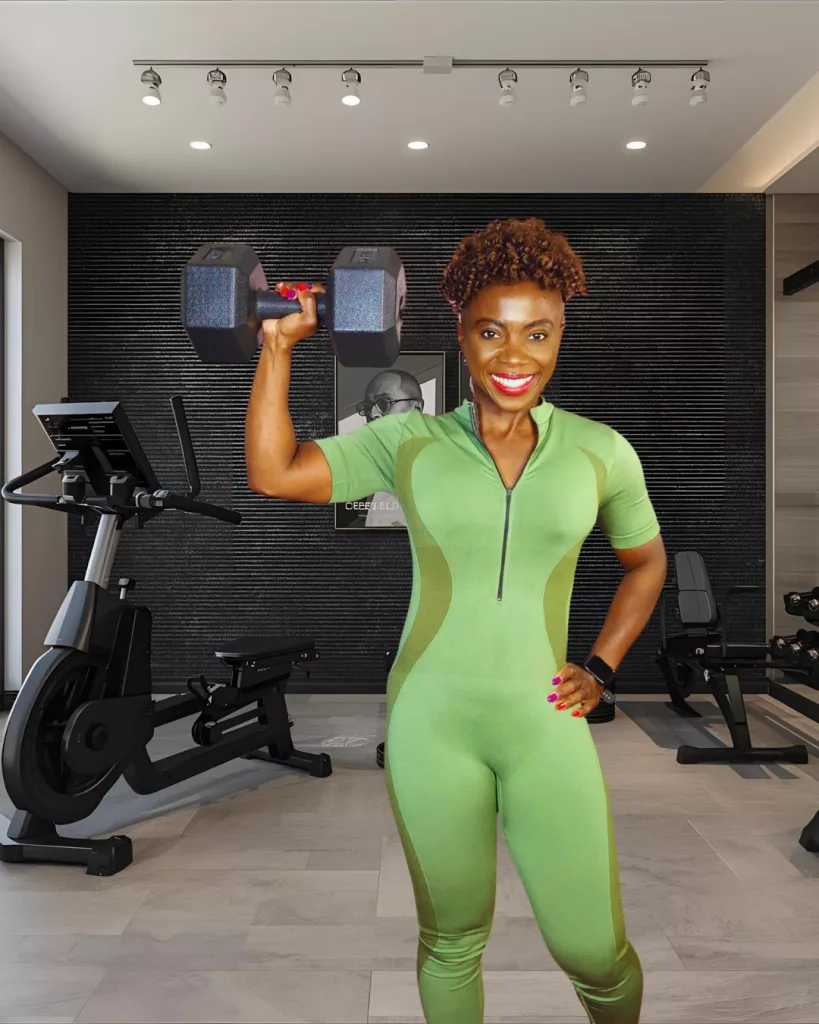
You’re waking up on time. You’re training. You’re eating better. You’re building your career. You’re doing the mindset work. And yet… you’re still tired. Not sleepy tired. Not lazy tired. But a deeper kind of exhaustion. If that sounds familiar, this is for you. Tiredness Isn’t Always About Sleep Here’s what most people don’t realise: Tiredness isn’t always a lack of sleep. It’s often chronic over-extension. Many high-achieving women are doing the right actions from the wrong internal state. You’re pushing through. Powering on. Ticking the boxes. But underneath all of that? Your nervous system is in survival mode. And survival mode is exhausting. Survival Energy vs Regulated Energy There are two ways to move through life: Survival energy sounds like “Let me just push through,” “I’ll rest after this,” or “It’s fine. I can handle it.” It looks productive, but it drains you quietly. Regulated energy looks different: calm focus, intentional movement, energy that sustains you, not depletes you. Here’s the truth: Pushing ≠ Progress. Calm capacity = sustainable results. The Hidden Drain No One Talks About Your fatigue may not be physical. It may be coming from constant decision-making, emotional labour, being “on” all the time, or holding everyone else together. Your nervous system doesn’t distinguish between danger and responsibility. If you’re always bracing, you’re always burning energy. And no amount of sleep will fix that. If you prefer to listen rather than read, press play below. This audio expands your view on why you are exhausted. If you’re doing everything “right” but still feel exhausted, your body isn’t broken. You’re just operating from the wrong internal state. This episode will help you understand why and what to do about it. Why Your Body Hasn’t Caught Up With Your Growth Yet Here’s what most women miss: You’ve upgraded your goals. But you haven’t upgraded your energy standards. This is an identity mismatch. You want peace but you move in urgency. You want softness but you operate in vigilance. You want expansion but your nervous system is guarding. Your body cannot hold new levels of success if it feels unsafe. This is why you can do everything “right” and still feel exhausted. Your body isn’t broken. It’s just trying to protect you. Rest Is Not Stopping Rest is integration. Rest is your nervous system catching up. Rest is how your body stabilises at a new level. You don’t need a new plan. You need a new way of moving through life. Regulated. Grounded. Intentional. This Is Exactly What We Recalibrate Inside GTWM Inside Grow & Train With Me, we don’t add more effort. We recalibrate your internal state. We build calm strength, regulated intensity, sustainable discipline, capacity to rest without guilt, and capacity to grow without burnout. Not hustle. Not force. Not survival. If this felt like it was written directly for you, you’re already aligned. 👉 Apply for Grow & Train With Me Start With a Simple Reset If you’re not ready for the full 9-month transformation but want to begin shifting how you move through life, start here: Smart Reset Body Foundation is a 4-week self-paced course designed to rebuild your relationship with food, movement, and rest from the foundation up. No pressure. No extremes. Just structure, support, and nervous system regulation. 👉 Get instant access for $99.99 You’re not behind. You’re not failing. You’re just ready to move differently. Warmly,Coach Titilayo 💚
Why High-Achieving Women Are Exhausted

The Day I Realized My Body Wasn’t the Problem. My Approach Was Five years ago, I was the woman who looked successful on the outside but felt like I was barely surviving on the inside. I had the career. The ambition. The drive. But I was exhausted. Constantly. I’d wake up tired. Push through the day on caffeine and willpower. Collapse at night. Repeat. I thought the problem was time management. Or discipline. Or maybe I just wasn’t built for this level of success. The real problem? I was treating my body like an obstacle instead of the foundation. I was focused on shrinking it, controlling it, forcing it to keep up with my ambition. And my body? It was quietly shutting down. That’s when everything shifted. I stopped asking “How do I make my body look better?” And started asking “How do I make my body strong enough to hold my life?” That question changed everything. Your Body Isn’t Separate From Your Success—It’s the Container For It If you’re a woman balancing career, family, goals, and personal growth, here’s what nobody tells you: Your body determines how much you can hold. Not just physically. But mentally. Emotionally. Energetically. It determines: When your body is in survival mode, you: When your body is regulated, you: Your capacity to thrive isn’t about working harder. It’s about building a body that can hold your ambition. The Mistake Most Women Make: Using the Body for Aesthetics Instead of Capacity Here’s what I see all the time: Women focus on shrinking their bodies. Very few focus on expanding their capacity. They want to lose weight, tone up, fit into smaller clothes. But they don’t think about: Your body is not just something to look at. It’s something to build with. And when you shift your focus from aesthetics to capacity? Everything changes. How Your Body Actually Supports Your Life (The Three Levels) Let me break this down simply. There are three levels where your body impacts your ability to thrive: 1. The Vision Level – Where Ideas Live This is where inspiration strikes. Where intuition lives. Where you feel the pull toward something bigger. But vision alone doesn’t build anything. You need execution. 2. The Strategy Level – Where Plans Form This is where you organize ideas. Make decisions. Create plans. But thinking alone doesn’t build anything either. You need capacity. 3. The Execution Level – Where Your Body Takes Over This is where everything becomes real. And here’s the truth most people miss: Your body determines your execution capacity. If your body is dysregulated: If your body is regulated: Most women have incredible vision. Most women have a solid strategy. But their bodies can’t hold the execution. And that’s where everything falls apart. You’re Using a Fraction of Your Capacity The human body is extraordinary. Your brain alone contains approximately 86 billion neurons. Your nervous system extends throughout your entire body, coordinating trillions of functions every second. But most women operate from: It’s like owning a mansion and living in one room. The real question isn’t “Do I have potential?” The real question is: How regulated is my nervous system?How expanded is my identity?How much capacity does my body actually have to hold success? How to Build a Body That Supports Your Life (Not Just Your Mirror) This is where transformation begins. Step 1: Shift Your Identity Your body responds to identity. If you see yourself as: Your nervous system will produce chemistry that matches that identity. Identity drives biology. When you shift how you see yourself. When you start identifying as someone who values rest, nourishes her body, and moves with intention, your body starts responding differently. New identity → new thoughts → new emotional state → new actions. This isn’t fantasy. This is how the nervous system works. 💚 Want to shift your identity? Download my FREE Identity Framework and discover the exact process I use with clients: https://coachtitilayo.com/ Step 2: Practice Real Self-Love (Not Just Bubble Baths) Self-love isn’t indulgence. Self-love is regulation. Energy is limited. And if you waste it through: You shrink your capacity to show up powerfully. Real self-love means: That’s not self-care. That’s performance optimization. Step 3: Regulate Your Nervous System There are two modes your nervous system operates in: Survival Mode: You may work harder in survival mode. But you build from contraction. Thriving Mode: When your nervous system is regulated: A regulated body holds a bigger vision. I break this down in a video that shows you why your body is not separate from your success but rather, the foundation of it: Watch it here: Simple Ways to Regulate Your Nervous System (Starting Today) You don’t need hours. You just need consistency. ✅ Strength training (builds resilience in body AND mind)✅ Slow breathing (4-6 breath cycles when stressed)✅ Walking without your phone✅ Morning sunlight exposure✅ Protein-rich meals✅ Consistent sleep schedule✅ Journaling to process emotions✅ Saying no without guilt These aren’t wellness luxuries. These are leadership tools. Stop Treating Your Body Like Decoration. Start Building Capacity. If you’re tired of: It’s time to rebuild your foundation. Inside Grow & Train With Me, we focus on: ✅ Identity-first transformation (not behavior-first)✅ Nervous system regulation (not just workouts)✅ Strength-based movement (build capacity, not just aesthetics)✅ Sustainable nutrition (no extremes, no guilt)✅ Emotional resilience (so stress doesn’t derail you) This isn’t a 6-week program. This is a 9-month foundation rebuild. Your body becomes strong enough to hold your vision. 👉 Learn more about Grow & Train With Me: https://coachtitilayo.com/grow-and-train-me/ Your Body Holds Your Capacity Your body determines: If success feels unsafe in your nervous system, you will unconsciously limit yourself. If expansion feels normal, you will grow naturally. Your body is not separate from your ambition. It is the container for it. And when you stop fighting it and start building it? Everything flows. Listen: Why Your Body Is Your Best Business Partner 🎧 Prefer to listen? I break this down in depth on the podcast including
Why February Is The Month Most Women Give Up (And It’s Not Because They’re Lazy)

February is when it gets real. New year energy? Gone. The excitement? Faded. And suddenly, the routines that felt doable in January feel like a mountain you’re too tired to climb. If that’s you right now, I need you to hear this: You’re not lazy. You’re not broken. You’re just missing one piece. February Isn’t the Problem. Your Identity Is. Five years ago, I was exactly where you might be right now. I’d start strong in January. New plans, new goals, new promises to myself. And by February? I’d quietly give up. Again. I thought I lacked discipline. I thought I wasn’t trying hard enough. But the truth? I was trying to change my behavior without changing who I believed I was. And that’s the piece most women miss. January Runs on Emotion. February Reveals Your Foundation. January is fueled by: But February? February removes that emotional fuel. And what remains is what actually runs your life. Not motivation. Not willpower. Not discipline. Your self-concept. The way you see yourself determines: And most women never address this layer. Here’s What This Looks Like in Real Life Let me show you two women: Woman A sees herself as “someone who tries to be healthy.” When February hits and life gets busy, she thinks: “I’ll get back to it when things calm down.” Because in her mind, wellness is something she does when she can not who she is. Woman B sees herself as “someone who prioritizes her health.” When February hits and life gets busy, she thinks: “What’s the smallest thing I can do today to honor myself?” Because in her mind, wellness isn’t optional, it’s part of her identity. Same circumstances. Different identities. Completely different outcome. Why Motivation Always Fades by February Motivation is a feeling. And feelings are temporary. If your health, body, and lifestyle changes depend on: They won’t survive February. Because February demands something deeper: identity alignment. If you still see yourself as: Your body will always return to that identity no matter how good January felt. The Shift That Changed Everything for Me I stopped asking: “What should I do?” And started asking: “Who do I need to become?” When I shifted my identity, when I started seeing myself as someone who values rest, nourishes her body, and moves with intention, the behaviors followed naturally. I didn’t need to force myself. I didn’t need to rely on motivation. I just became her. And everything else aligned. That’s the power of identity. Your Identity Is Running the Show Most women believe they’re making conscious decisions. But your choices are often automatic. You don’t decide to skip movement. You don’t choose to overeat or under-fuel. You don’t plan to abandon routines. Your identity decides for you. This is why you keep starting over. This is why February feels so hard. But here’s the good news: When you change how you see yourself, your behavior changes without force. See the Identity Shift in Action I break this down in a video that shows you exactly how identity drives behavior and how to shift it. 👉 Watch it here: 👉 Want to listen on the go with Spotify? Click here: Ready to Rebuild Your Identity? If you’re tired of starting over every February, it’s time to address the foundation. Download my FREE Identity Framework and discover: ✅ The exact identity shift that makes consistency effortless ✅ How to align your self-concept with your goals ✅ The simple tool that rewires how you see yourself This is the missing piece. This is what makes February and every month different. 👉 Download the Identity Framework now: https://freebies.coachtitilayo.com/identity-framework Why High-Achieving Women Struggle the Most in February High-achieving women are excellent at doing. They push. They perform. They deliver. But many are disconnected from being. And when February arrives, when the new year pressure fades and motivation stops working, the system collapses. Not because they’re weak. But because the body cannot be bullied into consistency. I know this because I lived it. For years, I relied on pressure to keep me going. I pushed through exhaustion. I ignored rest. I treated my body like a machine that just needed the right fuel and the right schedule. And every February? I’d hit a wall. It took me years to realize: My body wasn’t the problem. My identity was. I was trying to force behavior without shifting who I believed I was. And the moment I changed that? Everything changed. What Actually Works (And Lasts) Sustainable change happens when: This is why I don’t teach force. I teach identity-led movement, nutrition, and lifestyle alignment. Because when you shift your identity, your behavior follows without the grind. Two Ways to Start Shifting This Now 1️⃣ The Identity Framework (Start Here) If February feels heavy, this is where to begin. The Identity Framework helps you: This is the foundation. This is the missing piece. 👉 Download the Identity Framework here: https://freebies.coachtitilayo.com/identity-framework 2️⃣ Grow & Train With Me (For Women Ready to Rebuild) GTWM is for women who are done starting over. Inside this 9-month program, you’ll: This isn’t a quick fix. It’s a complete transformation of your body, mind, and lifestyle. And it starts with identity. 👉 Learn more about Grow & Train With Me: https://coachtitilayo.com/grow-and-train-me/ ⚠️ Spots are limited. I personally coach every woman in this program, so when spots fill, you’ll need to wait until the next round. Transformation starts the moment you decide you’re worth rebuilding for. Warmly,Coach Titilayo
3 Ways to Reset Your Energy This January (Without Dieting)

If January feels heavy, your body doesn’t need restriction, it needs regulation. Reset your energy without dieting by stabilising meals, choosing soft movement, and calming your nervous system.
Why January Doesn’t Need a New You; It Needs a Regulated You

Why January doesn’t need a new you is not about becoming someone different, but about regulating your body and energy before pushing into goals.
LETTING GO & ALLOWING-How to Enter January Without Pressure, and Still Receive What’s Meant for You

January doesn’t require pressure to work. This reflection invites you to let go of urgency, release control, and enter the new year from alignment—not exhaustion.